

Bella Vista Health Center Blog


10 Stroke Rehabilitation Exercises
Not only does exercise help to keep a person fit and healthy, thereby reducing the risk of a second stroke, but it also aids in stroke recovery.

Exercise is a key component of stroke rehabilitation. Not only does exercise help to keep a person fit and healthy, thereby reducing the risk of a second stroke, but it also aids in stroke recovery. Stroke rehabilitation exercises strengthen the signals between the brain and the body, resulting in restoration of function and coordination.
It’s crucial to begin exercising early in the rehabilitation process in order have the best chance of repairing damage, regaining movement, and reinforcing the brain-body connection. But because each person is affected differently by stroke, it’s important to work with stroke rehabilitation specialists who can determine which stroke rehab techniques will best meet your particular needs. To get an idea of some simple techniques that stroke rehabilitation specialists might use to help improve balance, coordination, and strength during post-stroke recovery, take a look below.
10 Exercises for stroke rehabilitation
- #1. Hip adduction/abduction - Lie on your back with your legs straight and flat on the ground. Slide one leg out to the side and then bring it back to center.
- #2. Knee extension – Sit in a chair with both legs bent and both feet on the ground. Slowly lift one foot until the leg is straight and then bring it back down slowly. This can be done standing as well, though be sure to hold onto a table or other surface so you can remain balanced while you slowly bend and kick one leg out.
- #3. Ankle rotation – Sit in a chair with both feet on the ground. Lift one foot off the floor just high enough to rotate the foot in a circle. Be sure to rotate in both directions.
- #4. Elbow stretch – Sit or stand with your arms at your sides. Slowly lift both forearms arms to bend your elbows and then slowly straighten them again.
- #5. Wrist rotation – Sit or stand. Lift one arm and rotate the hand slowly a circle. Then rotate it in the other direction.
- #6. Shoulder stabilizer – Lie on your back with your arms at your sides. Raise one arm up to shoulder level so that your hand is pointing to the ceiling. Now lift your shoulder blade off the floor by reaching your hand to the ceiling. Hold and repeat.
- #7. Weight shift and balance control – Start on your hands and knees with your weight distributed evenly. Rock slowly and shift your weight back toward your right leg, then forward to your left hand, over to your right hand, and back toward your left leg.
- #8. Hip and knee control – Lie down on your back with your knees bent and pointed to the ceiling. Slowly slide one heel away from your buttocks until the leg straightens. Then slowly slide the heel back toward the buttocks. The heel should remain in contact with the ground throughout the exercise.
- #9. Hip and pelvis strengthener – Stand facing a table or countertop with both feet flat on the ground. Hold onto the table while you shift your weight to one side, keeping your knee straight. Lift the opposite leg to the side while keeping a straight knee and maintaining a straight forward-facing posture. Slowly return to starting position, and then repeat on the other side.
- #10. Lower leg strength and coordination – Lie down on your side with bent knees stacked on top of each other. While keeping your feet together, lift the upper knee slowly. Hold for a couple of beats and the slowly lower it again.
It’s important to note that the above exercises are meant as general examples only, not as a prescription for someone who has suffered from a stroke. Please contact an educated professional who has been trained in stroke rehab techniques for a customized post-stroke treatment plan.
Inpatient stroke rehabilitation in San Diego
At Bella Vista Health Center in San Diego, our inpatient stroke rehabilitation specialists employ a combination of passive and active exercises, physical therapy, occupational therapy, speech therapy, and other proven therapies and techniques to help support each patient’s unique post-stroke recovery. If you are looking for a skilled nursing facility where you or a loved one can recover in a safe nurturing environment under the care of specialists trained in stroke recovery techniques, please call or drop by and see us in Lemon Grove today.

Post-surgery Rehab: Exercises for a Safe Recovery
After surgery care is different for everyone. Check out these post-surgery exercises that may be recommended depending on the type of injury you have.
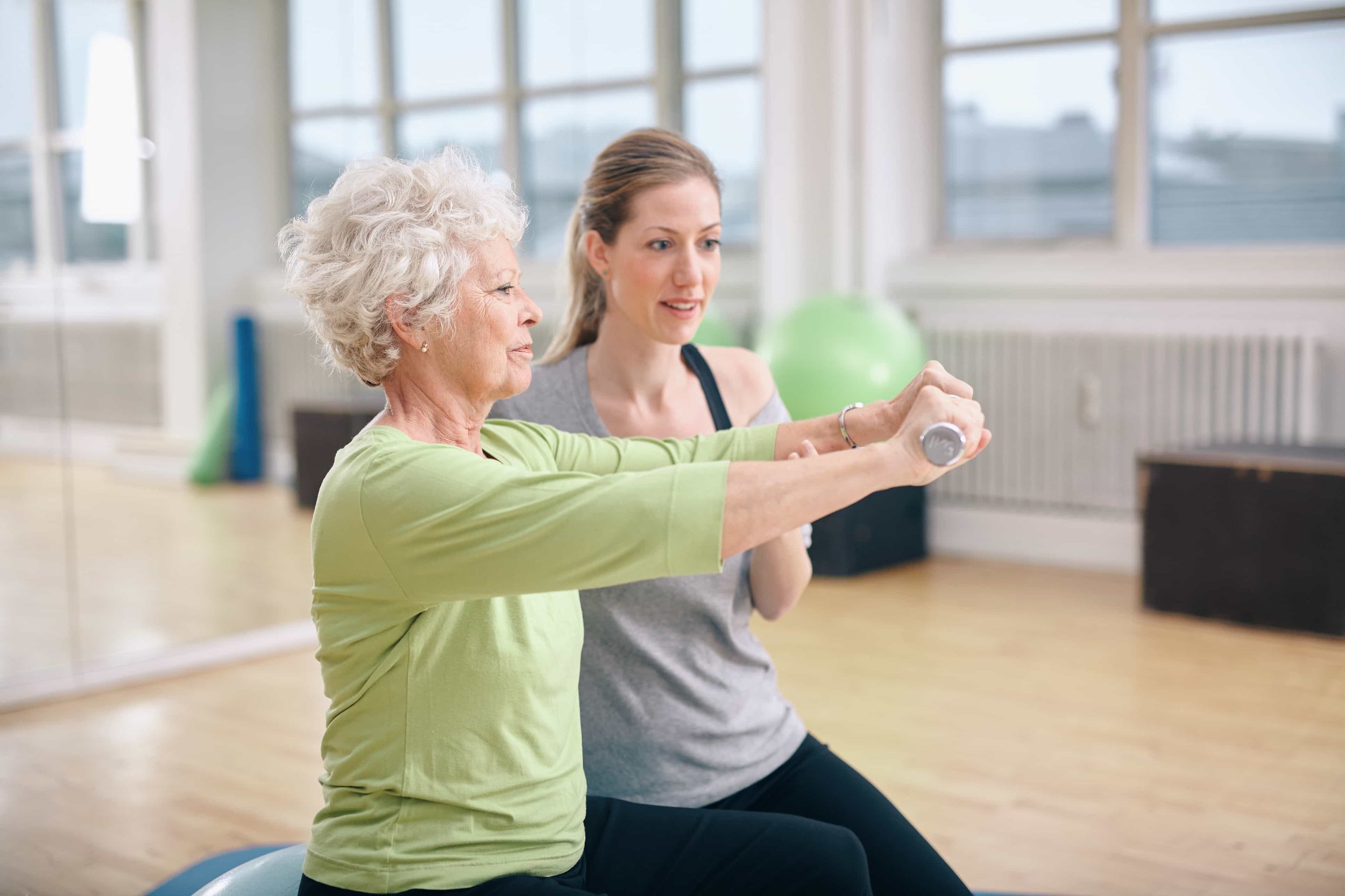
Anyone who has ever had surgery has probably experienced the temptation to stay curled up in bed during recovery. While that is sometimes what the doctor orders, it is more likely your surgeon will insist that you begin physical therapy within a few days. This is because post-surgery rehabilitation improves blood circulation to the site of the injury (helping you to heal faster) and reduces the likelihood of re-injury by helping you regain your strength and range of motion.
After surgery care is different for everyone. For example, rehabilitation for hip surgery recovery is going to be very different than rehabilitation for back surgery recovery. But generally, whether you recover in a rehabilitation center or at home, it is important to work with a trained and licensed physical therapist who has created a treatment plan just for you.
Your physical therapist will probably start you off with simple exercises that gradually increase as you continue to recover. Read on to get an idea of the post-surgery exercises that may be recommended depending on the type of injury you have.
Post hip replacement surgery exercises
Recovery from hip replacement surgery takes several months, though the exact time varies from person to person. Your physical therapist will give you rehabilitation exercises geared toward increasing hip strength and protecting your new joint. These exercises may include:
Hip abduction – Lie on your non-operated side with a pillow between your knees. Raise your operated leg up a few inches and hold.
Stair climbing and descending – Lead up the stairs with your good leg and down with your operated leg. Be sure to use the handrails in the early days of recovery.
Walking – You will need to start with a cane and may only be able to walk for a couple of minutes at a time in the beginning. Your physical therapist may recommend that you work your way up to 20 to 30 minutes 2 to 3 times per day.
Post knee surgery exercises
One of the most common athletic injuries involves the anterior cruciate ligament (ACL), which runs diagonally through the middle of the knee. Most ACL injuries are partial or complete tears of this ligament. Surgery is often required to restore knee stability, and recovery takes 6 months or more. Physical therapy is a must for regaining strength and motion in the knee. Rehabilitative knee exercises may include:
Passive knee extension – Sit in a chair and place your heel on another chair of equal height. Relax your leg and allow the knee to straighten.
Straight leg raises – Lie down on your back with both legs out straight. Bend the non-operated leg to 90 degrees. Contract the quads on your operated leg and slowly lift the leg. Hold at 6 inches for a couple of counts and then lower the leg slowly.
Heel slides – Sit on the floor with both legs out straight. Bend the knee of your operated leg by sliding your heel slowly across the floor toward you.
Post spinal surgery exercises
Most types of spinal surgery are done to relieve nerve pain in the back. Compressed nerves in the spine may be the result of herniated discs or bone spurs from osteoarthritis. Spinal surgery is usually only considered an option after other methods have failed to relieve the pain or numbness caused by these compressed nerves. Rehabilitation from spinal surgery requires physical therapy to restore your body’s alignment, balance, and stabilization. Post spinal surgery exercises will vary depending on the type of injury and surgery, but they may include:
Nerve stretch – Lie on your back with both legs stretched out. Lift one leg until you feel the stretch in the back of your thigh and through your hip. Place your hands behind the knee to support your raised leg and pump your ankle back and forth. Keep the knee still.
Bridge – Lie on your back with your knees bent at 90 degrees. Lift your hips off the floor, keeping a straight line from your shoulders to your hips.
Upper body extension – Lie on your stomach and slowly raise your head and shoulders a couple of inches off the ground by squeezing your shoulder blades together. Keep your neck straight and your gaze down at the floor throughout the exercise.
Post shoulder surgery exercises
A torn rotator cuff may require surgery, particularly for athletes such as pitchers and swimmers who frequently use the arm overhead. Individuals who experience persistent pain and weakness in the shoulder due to a torn rotator cuff and have found no relief with non-surgical treatment may also opt for surgery. Physical therapy exercises for shoulder rehabilitation are designed to restore motion and flexibility. Post shoulder surgery exercises may include:
Shoulder forward elevation – While sitting or lying down, clasp your hands together and lift your arms above your head, keeping your elbows straight. Hold for a count of 10. Then slowly lower your arms.
Walk up exercise – Keeping your elbows straight, crawl your fingers up a wall as high as you can without pain. Hold for a count of 10.
Pendulum, circular – Bend forward 90 degrees at the waist, holding onto a table with your non-operated hand for support. Allow your operated arm to dangle. Rock your body in a circular motion so that your operated arm moves clockwise 10 times and then counterclockwise 10 times. The arm stays relaxed but is moved by the rocking motion of your body.
Recover and rehabilitate with Bella Vista
At Bella Vista Health Center, our short-term rehabilitation facility provides a safe, welcoming environment where patients can receive the care they need to achieve full recovery from injury and surgery. Our skilled and compassionate physical therapists provide individualized treatment plans designed to aid in pain management, improve strength, and restore balance and mobility. If you’re looking for a rehabilitation center for yourself or a loved one seeking after-surgery care, you’ve come to the right place.
For more information about our short-term rehabilitation services or physical therapy programs, give us a call at (619) 644-1000.


