

Bella Vista Health Center Blog


Essential Gait Training Exercises For Elderly
Gait training is a type of physical therapy that aims to improve strength and balance in your lower body so you can walk normally and safely.
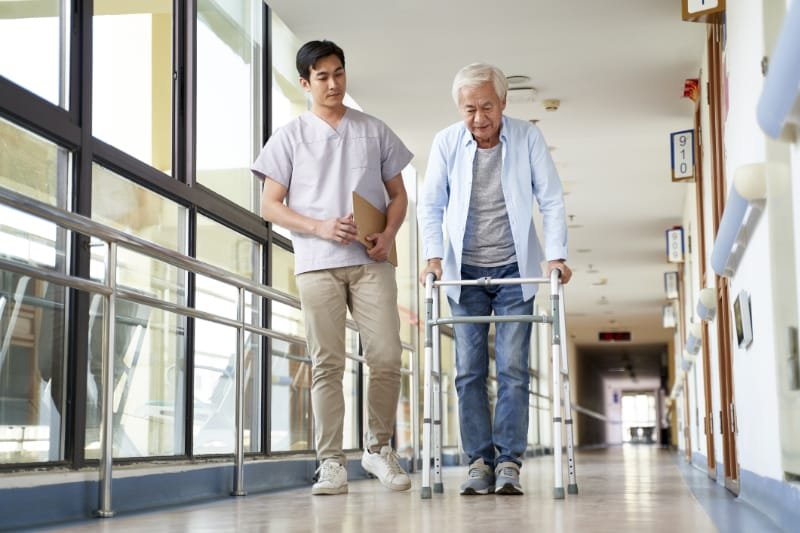
Falls can be extremely dangerous to older adults. Although falling is not a normal part of aging, there are certain factors that can increase the risk of falls for older people. These include deteriorating eyesight as well as illnesses and physical conditions that affect strength and balance. According to the Center for Disease Control (CDC), of the 36 million falls by older adults that are reported each year, 3 million result in emergency room visits, and 32,000 are fatal. These are scary statistics, but the good news is that there are things you can do to decrease your risk of falling, such as keeping your home well lit and removing throw rugs or tacking down carpet edges. Gait training also helps to prevent falls, as it strengthens muscles and improves stability.
What is gait training?
Gait training is a type of physical therapy that aims to improve strength and balance in your lower body so you can walk normally and safely. Your gait is the mechanics of your walk. It’s the cycle of repetition involving the coordinated efforts of your feet, knees and hips. Gait training is a set of exercises used to help improve or restore function to this cycle. It also involves your ability to maintain your balance and coordination as you navigate obstacles in the environment. After a stroke, injury, or surgery in the lower extremities, a physical therapist may add gait training exercises to your treatment plan in order to redevelop muscle memory and prevent future falls. Walking itself is a type of gait training, which makes it an excellent exercise for older people, but there are other essential gait training exercises as well.
Essential gait training exercises for the elderly
Gait training isn’t something you should do on your own, particularly if you struggle with balance. It’s best to work with a physical therapist or other healthcare professional who can create a customized set of exercises designed specifically with your needs and safety in mind. There are, however, a few essential gait training exercises that many people can easily do on their own once they've been cleared by their doctor or physical therapist. These include:
Heel raises - Start in a seated position in a chair, with your feet flat on the floor. Point your toes to raise your heels. Do this 10 times.
Increases strength in the calf muscles, helps with balance, and improves ankle mobility.
Toe raises - Start in a seated position in a chair, with your feet flat on the floor. Raise your toes off the ground while keeping your heels connected to the floor. Do this 10 times.
Strengthens shin and ankle muscles, helps with balance, and improves ankle mobility.
Knee to chest (or Seated march) - Start in a seated position in a chair. Raise one knee to your chest, as though you’re marching. Put it down and raise the other knee. Be sure to keep your back straight. Continue until you have raised each knee 10 times.
Strengthens the core, hip flexors, and quadriceps.
One-leg stand - Stand and hold onto a table, a chair, or a wall for support. Lift one foot off the ground and hold it for a few seconds while you balance on the other leg. Try this 10 times on each leg.
Improves balance.
Heel-toe walk - Walk next to a wall or a bar for support. Put your right foot down and then place the left in front of it, with the heel of the left foot directly lined up with the toes of the right. Then put the right foot in front, with the heel directly lined up with the toes of the left. Continue in this way for 15 feet or so.
Improves balance and coordination.
Step-overs / side stepping / figure eights - Place two soft objects on the floor about 3 feet apart. Step over each object several times. Be sure they’re placed at a distance where you naturally step over them with each foot. For side stepping, lift your foot and step sideways over each obstacle several times, leading with each foot an equal number of times. For figure eights, walk around the obstacles in figure eight movements.
Retrains the body for proper movement and lowers the risk of tripping over obstacles.
Even if the above exercises seem simple, it’s important to run them by your doctor or physical therapist before incorporating them into your daily routine. If you have suffered from a stroke, or if you have been ill or injured and have lost some mobility and strength in your lower extremities, chances are, you’ll need gait training. And when you do, Bella Vista is here to help.
Physical therapy and rehabilitation in San Diego
Physical therapy not only improves mobility, strength, and balance to aid independence, but it can also help prevent falls in the future. At the Bella Vista Health Center Physical Therapy Department, our therapists provide specialized gait training programs to help residents recovering from stroke, joint replacement, or other conditions restore lower-limb strength and functioning in order to maximize independence and lower the risk of future falls. If you or someone you love is in need of physical therapy or occupational therapy, give us a call at (619) 644-1000 or come by to visit our 5-Star Skilled Nursing Facility in Lemon Grove Today.


Why Seniors Should Have Physical Therapy Before Rehab (Prehab)
The idea of prehab physical therapy is to strengthen the relevant muscles and maximize the range of motion before surgery so you don't get set back.

Most people planning to undergo joint replacement or ligament repair surgery know they’ll need to participate in a physical therapy program as part of the recovery process. But did you know that physical therapy is also highly beneficial in the weeks leading up to orthopedic surgery?
Affectionately known as “prehab”, pre-operative rehabilitation is the process of improving fitness, functionality, and preparedness prior to surgery. The general idea of prehab physical therapy is to strengthen the relevant muscles and maximize the range of motion so that any decline that takes place as a result of the surgery will not set you back as far as it would have otherwise. But the benefits don’t stop there. Read on for more reasons why seniors should have physical therapy before surgery.
Why seniors should have physical therapy before rehab
Recovery after surgery is challenging. But the better prepared you are physically and mentally, the higher the likelihood you’ll have a speedy and successful recovery. Although a general exercise program is certainly beneficial, a customized physical therapy program helps target the treatment area: reducing inflammation, improving blood flow, strengthening the muscles, and restoring range of motion. Typically, six weeks of physical therapy prior to joint-replacement surgery can provide a number of wonderful benefits, including:
Mental preparation
Prehab does more than just prepare the muscles and joints for surgery. It also prepares the mind. Seniors who worry about their ability to recover often find that prehab gives them a clearer picture of what to expect after surgery as well a sense of confidence about their ability to pull through.
Faster recovery
Surgery creates a deficit. During the recovery period, strength and range of motion are lost. Without prehab, the senior will come out of surgery with a long way to go to get “back to normal.” By building up strength ahead of time, however, the deficit created by surgery might find the individual just a few steps away from “normal.”
Saves money
A faster recovery means a shorter hospital stay and less money spent on rehabilitation. One study found that patients who exercise prior to surgery are 73% less likely to be discharged to an inpatient rehabilitation facility following surgery. Prehab can help increase the likelihood of the senior being discharged directly to home.
Less pain
The targeted treatment of pre-surgical physical therapy creates strength and health in the treatment area and supports a faster recovery. The sooner the joint gets moving again, the less pain, swelling, and stiffness the senior will experience.
Reduced atrophy
When the muscles aren’t used, they lose mass. Two weeks in bed can diminish the quadriceps by 20% in a healthy young person. The process happens even more quickly in older patients. Because prehab results in less pain and faster recovery after surgery, it allows seniors to get up and move those muscles sooner, potentially reducing the amount of muscle atrophy.
Improves surgical outcomes
In most cases, pre-surgical preparedness improves more than just the functional capabilities of the muscles and joints. It also promotes and facilitates healthy behavior changes that often last through the postoperative period. Patients who follow through with their prehab physical therapy are more likely to follow through with their post-operative rehabilitation as well, improving the overall outcome of their treatment.
Whether you or your loved one is planning a joint-replacement or ligament repair surgery, Bella Vista physical therapists offer customized pre- and post-surgical rehabilitation programs designed to optimize strength, functionality, and independence.
Physical therapy (Prehab) in Lemon Grove | Bella Vista Health Center
At Bella Vista, we offer short- and long-term physical therapy programs as well as essential services, social opportunities, and round-the-clock care from a compassionate staff committed to providing a nurturing environment for all residents. For more information or to schedule a tour, call us at (619) 644-1000.


Physiotherapy Vs Physical Therapy
What exactly is physical therapy, and how does it differ from physiotherapy? Here’s what you need to know.

When it comes to achieving optimal wellness, movement is key. Physical exercise is a crucial component of maintaining both physical and mental health. When movement is difficult due to illness, injury, pain, or problems with coordination, balance, and flexibility, physical therapy can help diagnose and treat the underlying problem and get you moving again. But what exactly is physical therapy, and how does it differ from physiotherapy? Here’s what you need to know.
Physical therapy vs physiotherapy
The terms “physical therapy” and “physiotherapy” are often used interchangeably, and for good reason—they are the same thing. You’ll hear one or the other used more frequently in certain parts of the world. In Canada, Europe, and Australia, physiotherapy is more commonly used, but in the United States, you’re more likely to hear it referred to as physical therapy. Most people don’t make a distinction between the two, although some believe physiotherapy is more hands-on, while physical therapy is a more exercise-based treatment. The truth is that each involves a combination of both. Whether you call it physical therapy or physiotherapy, it is a movement-based treatment that helps optimize health and wellbeing.
What is physical therapy / physiotherapy?
Physical therapy is a type of healthcare that aims to manage pain, prevent injury, maximize mobility, and improve fitness. Licensed physical therapists are considered “movement experts,” because they are skilled and trained in the study human anatomy, the principles of exercise, physiology of exercise, kinesiology (scientific study of human body movement), and other topics that enable them to identify, diagnose, and treat problems with movement. Physical therapy involves the use of therapeutic exercises and physical agents such as heat, ice, or electric stimulation.
What are the goals of physical therapy / physiotherapy?
The specific goals of physical therapy vary from person to person, depending on the treatment plan, which is designed by the physical therapist after evaluating the needs of the individual. Some common goals include:
Pain relief
Ice, heat, stretching, strengthening, and massage may all be part of a physical therapy treatment plan designed to relieve or eliminate pain.
Avoid surgery
Through strategic physical therapy, pain management techniques, and the improvement of movement problems, many patients are able to avoid the need for certain types of surgery.
Recovery from surgery
Physical therapy is an important part of rehabilitation following joint replacement and other surgeries. It is used to help restore strength, mobility, and joint function.
Recovery from injury
Musculoskeletal injuries from sports or accidents benefit from physical therapy, not only for healing and recovery from the injury itself but also for prevention of further injury.
Stroke rehabilitation
Physical therapists use movement and physical interventions to help stroke survivors regain balance and restore strength, function, and coordination.
Pulmonary rehabilitation
Aerobic and anaerobic exercises to help build endurance and increase lung capacity are important parts of a physical therapy treatment plan for pulmonary rehabilitation.
Each person’s treatment plan is created specifically for their individual needs. If you or someone you love is recovering from an illness, injury, or surgery that’s making movement difficult or painful, a customized physical therapy treatment plan can help get you on the road to recovery so you can keep doing the things you love.
Physical therapy rehabilitation in San Diego at Bella Vista Health Center
At the Bella Vista Health Center in Lemon Grove, we provide evidence-based, outcome-driven physical therapy programs in our 5-Star skilled nursing facility. Our highly experienced and exceptionally compassionate physical therapists provide each patient with customized treatment plans designed to relieve pain, restore function, and enhance health. Our rehab patients benefit from an individual, patient-centered approach that truly focuses on each person’s needs. For more information on our physical therapy rehab programs, give us a call at (619) 644-1000 today.