

Bella Vista Health Center Blog

7 Things You Didn't Know About Physical Therapy
If a doctor has recommended physical therapy for you or someone you love, here are 7 things about it you might not know.

For many people, recovering from an injury, surgery, or serious illness is a long process that extends beyond the initial hospital stay. In addition to plenty of rest, a nutritious diet, and wound care if necessary, restoring functional mobility to the affected body part is a top priority. Physical therapy helps patients achieve this goal, but there are many misconceptions about its benefits and limitations. If a doctor has recommended physical therapy for you or someone you love, here are 7 things about it you might not know:
1. Physical therapists are skilled, experienced, and highly educated
Like most people in the healthcare field, physical therapists are not only compassionate and motivated to help others, but they are also highly trained after years of rigorous education. After obtaining a bachelor’s degree in physiotherapy, physical therapists must complete a doctorate degree program and meet the additional requirements of each state’s licensing board. In total, the education requirements for physical therapists fall somewhere between the requirements for a nurse and a physician, ensuring you’re in good—and highly skilled—hands.
2. Physical therapy has several classifications
There are many areas of expertise within the field of physical therapy, allowing therapists to specialize in specific ailments. Some of the classifications include cardiovascular and pulmonary rehabilitation, neurological rehabilitation, post-operative care, orthopedic rehabilitation, acute care, and wound care.
3. Physical therapy can treat many medical conditions
Recovery from illness, injury or surgery is the most common reason patients undergo physical therapy, but there are several medical conditions that can benefit in various ways from physical rehabilitation, including:
Parkinson’s Disease
Huntington’s Disease
Cerebral Palsy
Lymphedema
Multiple Sclerosis
Vertigo
Muscular Dystrophy
Osteoarthritis
Carpal Tunnel Syndrome
Chronic Obstructive Pulmonary Disease (COPD)
Diabetes
Pelvic pain and sexual dysfunction
4. Patients of all ages can benefit from physical therapy
A common misconception about physical therapy is that it primarily treats otherwise healthy adults suffering from temporary medical conditions. However, physical therapists work with patients of all ages, from infants struggling to reach developmental milestones to senior citizens recovering from a stroke. Functional mobility can be compromised at any age for a wide variety of reasons, and physical therapists have the skills to treat them all.
5. Physical therapy is not meant to be painful
Restoring functional mobility is often a long, gradual process, and while some measure of discomfort is common, pain is usually an indicator that something isn’t right. For example, physical therapy for an injury will avoid certain movements or positions that aggravate the condition—pain means adjustment in the treatment is required.
6. Physical therapists are not masseuses
As mentioned above, physical therapists require extensive education to obtain a license, but many people still assume physical therapy isn’t much different than a complex massage. However, masseuses typically provide massages for the purpose of relaxation and stress relief. The types of massage used to treat physical therapy patients involve different techniques and a completely different goal: improving the function of a muscle.
7. Treatment at a physical therapy clinic alone is not enough
Most physical therapy treatments involve sessions within a clinic (or private at-home sessions with a therapist) as well as a customized exercise program for patients to follow between sessions. For the best results, it’s important for patients to follow the at-home program—otherwise full recovery can take much longer than anticipated. The at-home program is typically less strenuous than treatments within the clinic, with the goal of maintaining mobility levels that the physical therapist can build upon at the next session.
Compassionate care and effective recovery
If you or someone you love is in need of physical therapy in San Diego, Bella Vista Health Center can help. Our skilled nursing facility offers short- and long-term rehabilitative care that combines compassion with innovative programming and helps patients achieve maximum recovery and independence. To learn more, give us a call at (619) 644-1000 or fill out our contact form to schedule a tour.

Top Physical Therapy Exercises After an Injury
After a severe injury or surgery, you might be tempted to take it easy for the long haul. But physical therapy is often the only way to regain full function of the injured area and restore strength and flexibility.
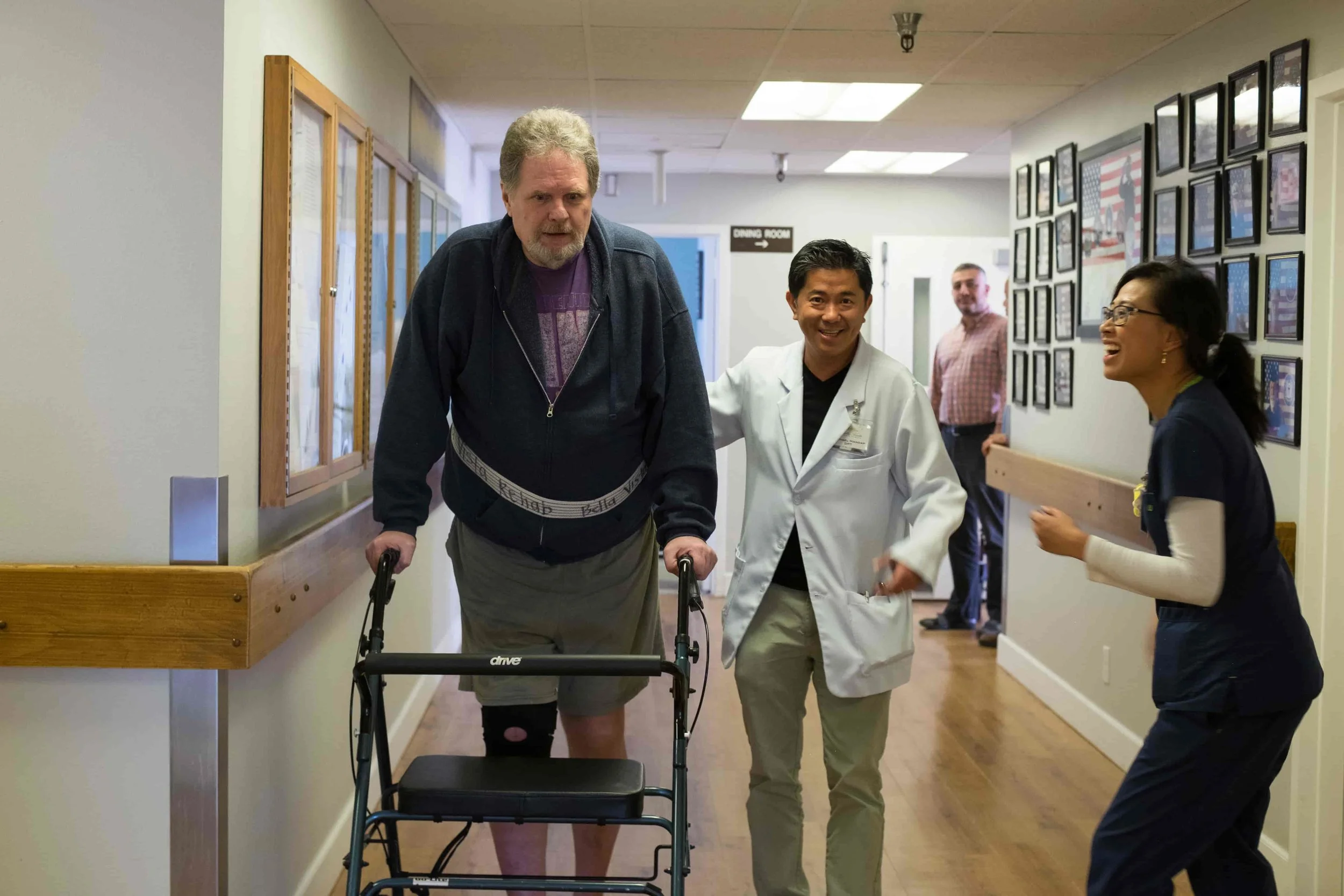
After a severe injury or surgery, you might be tempted to take it easy for the long haul. But physical therapy is often the only way to regain full function of the injured area and restore strength and flexibility. Through various exercises and drills, physical therapy also helps prevent re-injury of the affected area, an aspect of rehabilitation many people overlook.
Different injuries require different strategies for rehabilitation, and our physical therapists at Bella Vista Health Center tailor their efforts to each patient, targeting specific areas of weakness to relieve stress and help the body function without pain. Many of our rehabilitation programs incorporate one or more of the following top physical therapy exercises after an injury:
Top 7 Physical Therapy Exercises:
Top Physical Therapy Exercises
1. Resistance band exercises
Resistance bands allow patients to gradually increase the stress on their muscles as they regain more strength. And because resistance is maintained through every part of the exercise, the result is more complete stimulation and better range of motion.
Examples of effective resistance band exercises include:
Knee extensions to increase strength in patients recovering from a knee injury
One-hand internal rotations to strengthen injured rotator cuff muscles and reduce shoulder pain
2. Therapy ball exercises
Therapy balls are great for improving strength and balance for anyone, but therapy ball exercises are particularly effective for physical therapy patients because they reduce muscle and spinal strain during certain movements.
Examples of effective therapy ball exercises include:
Pelvic isolation for patients recovering from back injuries
One-legged hamstring curls strengthen muscles around the knee and reduce strain on an injured ACL
3. Balance and wobble board exercises
A balance or wobble board is a basic piece of equipment involving a ball projecting from the base of a round board. Wobble boards enhance range of motion and strength, improving overall balance and flexibility.
Examples of effective wobble board exercises include:
Controlled tilts for patients recovering from ankle injuries
Balance training to help prevent shoulder joint dislocations, ankle sprains and re-injury of ACL
4. Foam roller exercises
Long cylinders made of foam are frequently used to stretch a patient’s fascia, a layer of connective tissue beneath the skin that envelops the entire body. Stretching the fascia aids in flexibility and range of motion. Foam rollers can also be used in exercises specifically aimed at improving balance and strengthening a patient’s core.
Examples of effective foam roller exercises include:
Slowly rolling the foam over a target area to massage tight, injured muscles and break down scar tissue
Rolling the foam either parallel or perpendicular to the spine to increase mobility and reduce stiffness for patients recovering from an injured back
5. Plyometrics
Plyometrics are strengthening exercises that incorporate jumping, bounding, and hopping movements to increase muscle power, strength, balance, and agility. Plyometrics are especially crucial for sports-related injuries.
Effective low-intensity plyometric exercises include:
Lateral hops over short cones, lunges, and multiple-hoop jumps for patients recovering from ACL injuries
Standing two-arm overhead throw of medicine ball for rehabilitation of injured rotator cuff
6. Biofeedback
Biofeedback is used to train patients to improve muscle strength by applying electrodes to the skin that read signals from the body. When biofeedback is used in a physical therapy setting, it gives patients an immediate sense of control and increases interest and motivation, which in turn produces better functional outcomes.
Biofeedback can be used in physical therapy to:
Help stroke patients regain movement of paralyzed or weakened muscles
Strengthen weak pelvic floor muscles in patients recovering from pelvic injuries
7. Pilates
Pilates is much more than the latest gym trend—it’s a comprehensive exercise system that uses isolated muscle movement to boost strength, control core muscles, improve spinal mobility, increase postural strength, and correct muscular alignment.
Pilates can be used in physical therapy to:
Improve posture and reprogram muscles for patients with repetitive strain injury (RSI)
Restore function following a stroke, or in patients with Parkinson’s or MS
Get back to your best at Bella Vista Health Center
At Bella Vista Health Center, we understand that all physical therapy patients respond to exercises at different rates of improvement. That’s why our Physical Therapy Department customizes treatments to meet each patient’s unique needs. Our evidence-based, outcome-driven therapy programs strive to get our patients back to their best. If you or someone you love, is in need of physical therapy in San Diego, contact us today for more information.


Why is Physical Therapy Important After Surgery?
if you think the recovery process is all about soup served in bed while binge-watching your favorite shows, think again. To regain strength and mobility after surgery, you will most likely need physical therapy, which involves specific exercises and specialized equipment tailored to your injury recovery and treatment goals.

Surgery is a daunting prospect regardless of the injury it aims to address, and there’s no greater relief than waking up to a successful outcome. But if you think the recovery process is all about soup served in bed while binge-watching your favorite shows, think again. To regain strength and mobility after surgery, you will most likely need physical therapy, which involves specific exercises and specialized equipment tailored to your injury recovery and treatment goals.
Unfortunately, many patients do not comply with physical therapy recommendations, sometimes because they want to avoid the hassle or pain that is assumed to accompany physical therapy, but often because they don’t fully understand why it’s so vital for recovery. If you have an upcoming surgery and your doctor has recommended physical therapy afterward, here is why you should heed her advice:
Specialized exercises help you regain mobility
Whether you’re an active athlete or you live a quiet life in a nursing facility, the ability to return to daily activities after surgery is key for maintaining your quality of life. Directly after surgery, you will likely experience swelling and limited range of motion, along with severe pain and diminished mobility. Failure to use your joints after surgery can cause them to heal improperly. Physical therapy exercises will restore movement and strengthen the part of your body that is healing. It will also decrease the likelihood of re-injury.
Guided stretching maintains flexibility
After surgery, scar tissue forms around bones and muscle while soft tissue contracts. If left untreated, this scar tissue will limit your range of motion and flexibility. Regular stretching exercises during physical therapy will ensure that scar formation doesn’t hamper your recovery. Physical therapy is also vital to regaining or maintaining your range of motion. Stiff joints and tight muscles can prevent you from performing even the simplest of tasks, such as climbing stairs or reaching overhead, which is why stretching under the guidance of a medical professional is essential to your recovery.
Regular movement promotes healing
One reason it’s important to start physical therapy as soon as your surgeon or orthopedic specialist recommends it is that it can promote healing. Improved blood circulation through movement exercises will hasten the healing process by delivering key fuels and removing fluid build-up around the injury.
Physical therapy actively engages you in your rehabilitation
Research has shown that patients who are actively engaged in their healthcare have better experiences than those who are not. Working with your physical therapist will allow you to be actively engaged in your recovery, which can reduce the stress and feelings of helplessness that often result after a surgical procedure. Physical therapy can also restore self-confidence, allowing you to accomplish goals you may not think possible otherwise.
Looking for a skilled nursing facility that offers physical therapy in San Diego?
At Bella Vista Health Center, our Physical Therapy Department offers an individual patient-centered approach that truly focuses on each person’s needs. Our evidence-based, outcome-driven services and therapy programs are designed to relieve pain, restore function, and enhance health through high-quality, skilled nursing care in an environment of healing and wellbeing.
If you or someone you know is looking for a skilled nursing facility that also offers physical therapy services, we invite you to call or visit our five-star location in Lemon Grove today.